The Spiritual Engineers…
From ocean worlds to galactic conscience
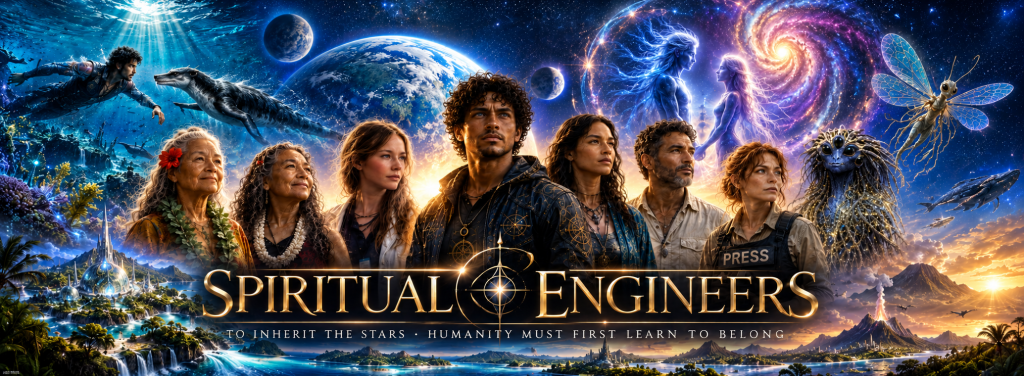
Now Available!
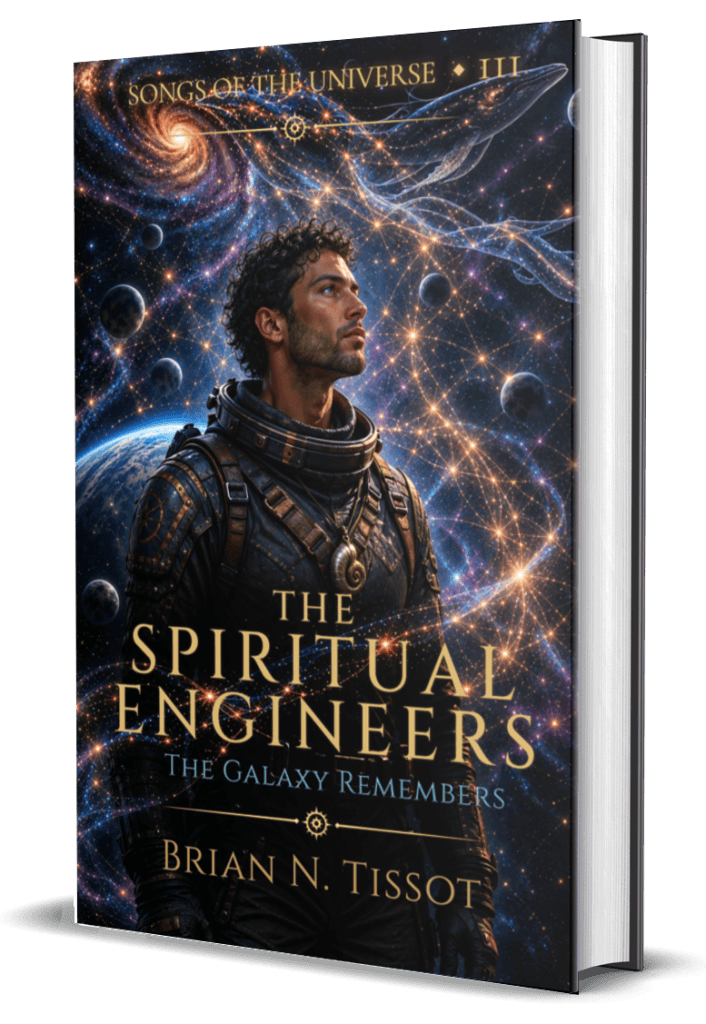
In the far reaches of the galaxy, life is not an accident. It is engineered. Nurtured. Protected.
The Spiritual Engineers is a sweeping science-fiction epic about the evolution of consciousness, ethics, and responsibility on a cosmic scale. It begins with the universe itself—a living harmonic born from awareness, its delicate coherence threatened by the V’korr, entities that feed on fear, fragmentation, and unresolved suffering. Opposing the V’korr is a loose alliance of ancient, diverse intelligences known as the Engineers, whose purpose is not conquest but cultivation: guiding worlds toward coherence without violating their autonomy. As an interstellar war reaches a fragile containment, the story turns toward a quieter yet more dangerous question—what happens when survival no longer depends on power, but on moral integration, remembrance, and the courage to choose wholeness.
At the heart of the novel is Rigel Kaʻuhane Anderson, a human raised on Thalassa among the Nesoi, an ocean-dwelling species descended from Earth’s early cetaceans. Drawn into the Engineers’ orbit, Rigel undergoes a series of ordeals—entering a diamond-core star, confronting mirrored versions of himself, witnessing civilizations that failed to change in time, and resisting forces that mistake purity and certainty for truth. His journey reframes heroism as presence, restraint, and the capacity to metabolize suffering without passing it on. The Spiritual Engineers is ultimately a meditation on stewardship—of worlds, of stories, and of the fragile, shared work of becoming conscious in a living universe.
Blending the philosophical depth of Ursula K. Le Guin, the epic scale of Frank Herbert, and the mythic resonance of Tolkien, The Spiritual Engineers reimagines science fiction as a meditation on consciousness, stewardship, and the destiny of sentient life.
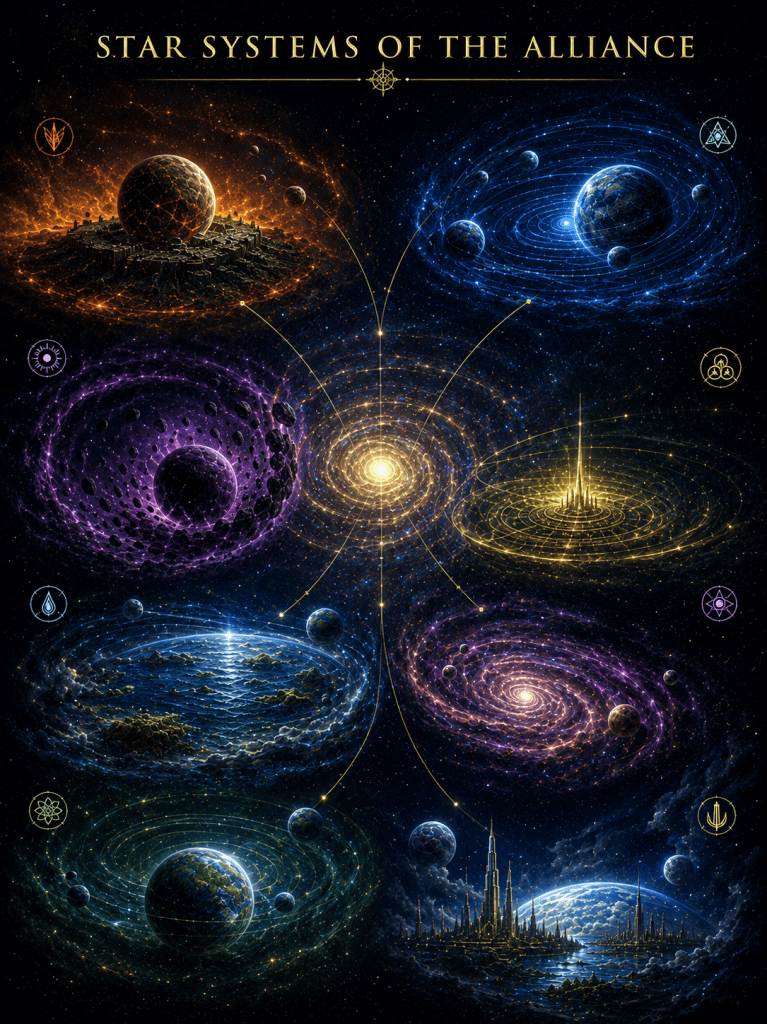
EXPLORE TOPICS IN THE BOOK


Explore ALL books

Subscribe to the newsletter: